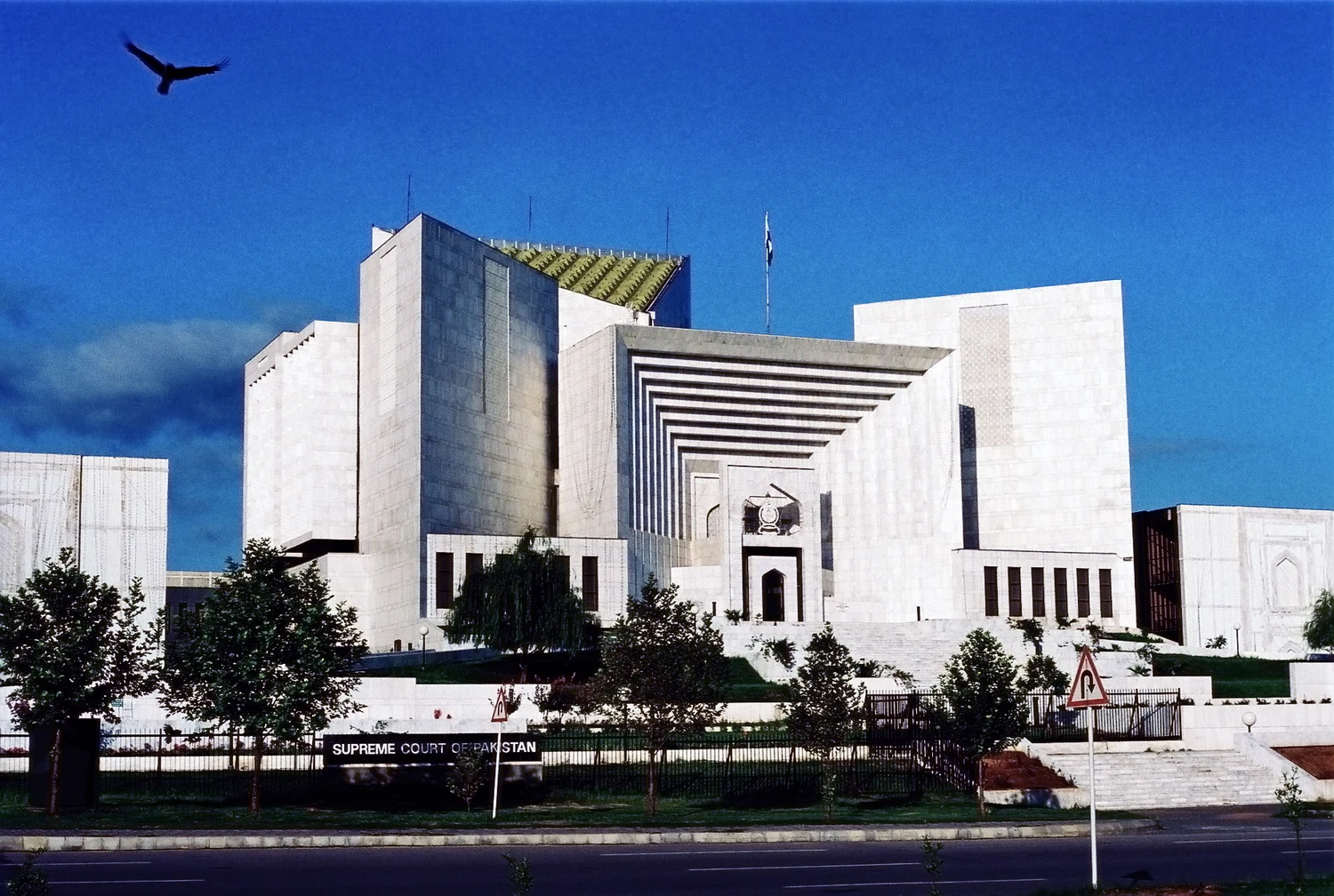
Nasirul Mulk is a Pakistani jurist and politician who served as the seventh caretaker prime minister of Pakistan in 2018. He previously held the position of the 22nd chief justice of Pakistan between 2014 and 2015. His career includes roles as an acting Chief Election Commissioner and a judge at the Peshawar High Court.
Early life and education
Nasirul Mulk was born on 17 August 1950 in the Swat tourist locality of Khyber Pakhtunkhwa. He attended Abbottabad Public School for his high school education before moving to Jahanzeb College. He attained a BA in Fine Arts in 1970 at the college. In the same year, he enrolled at Peshawar University to begin his legal studies. His professors described him as a talented and bright student during this period.
He obtained a Bachelor of Laws from Peshawar University in 1972. Following this, he traveled to England where he qualified as a barrister through the Inner Temple in 1976. He also earned a Master of Laws (LL.M.) qualification during his academic journey.
Career
Mulk began his professional life practicing law at the Peshawar High Court after returning to Pakistan. He briefly served as a professor of law at Peshawar University and lectured on civil law as a visiting scholar at the Pakistan Administrative Staff College. His students remembered him as a prepared professor who maintained complete command over his subject. He practiced for over 17 years at the Peshawar High Court and was elected Secretary-General of the Peshawar High Court Bar in 1981. He later served as president of the bar on two occasions, specifically in 1990 and 1993.
From 1993 to 1994, he worked as an advocate general for the provincial government of Khyber–Pakhtunkhwa. He ascended to a judgeship at the Peshawar High Court on 6 June 1994. After being appointed Chief Justice of the Peshawar High Court on 31 July 2004, he moved to the Supreme Court of Pakistan in 2005.
During his judicial tenure, Mulk presided over the Mukhtār Mā'ī case involving a highly publicized gang rape. His judgment held that Jirgas cannot be allowed to arbitrarily punish individuals through watta satta marriages or gang-rape to settle disputes. In 2007, he sat on a seven-panel bench that issued an injunction against the imposition of a state emergency. Although he was terminated from the Supreme Court for refusing to take an oath under the PCO 2007, he was later reinstated with his seniority intact.
He served as the acting Chief Election Commissioner from 30 November 2013 to 6 July 2014. President Mamnoon Hussain confirmed his appointment as Chief Justice of Pakistan on 6 July 2014. He was known by fellow judges for being a proactive judge who followed the letter and spirit of the law. He retired from this position on 16 July 2015.
On 28 May 2018, Mulk was appointed as the caretaker prime minister of Pakistan. This appointment occurred after Prime Minister Shahid Khaqan Abbasi and opposition leader Syed Khurshid Ahmed Shah reached an agreement. His first official action involved a reshuffle of the bureaucracy, which included appointing Suhail Aamir as Principal Secretary. He also instructed his legal team to appeal a Lahore High Court decision regarding election nomination papers.
Personal life
Mulk comes from a wealthy and politically influential Mitravi Swati Pashtoon family in Swat. His father, Kamran Khan, served as a Senator between 1973 and 1977. His younger brother, Shuja-ul-Mulk, held a position as Senator from 2003 to 2009. His uncle, Chacha Karim Bux, was a prominent social worker, while his sibling Rafil-ul-Mulk served as a past mayor of Swat.