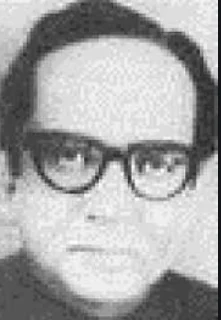
Shah Azizur Rahman was a Bangladeshi politician who served as the prime minister of Bangladesh. He remains a controversial figure due to his collaboration with the Pakistan Army during the struggle for independence.
Early life and education
Shah Azizur Rahman was born in Kushtia, Bengal, on 23 November 1925. He earned a Bachelor of Arts degree in English language and literature from Calcutta University before he went to study at Dhaka University. Between 1945 and 1947, he held the position of general secretary in the All Bengal Muslim Student League. As a student leader, he participated in the Pakistan movement and the Bengal Provincial Muslim League.
Following the partition of India, he served as the joint secretary of the East Pakistan Muslim League. He opposed the Bengali language movement that occurred in 1952. Rahman remained active in national politics within Pakistan where he became a vocal opponent of Sheikh Mujibur Rahman and the Awami League.
Career
Rahman served as the general secretary of the East Pakistan Muslim League from 1952 to 1958. He participated in the 1962 Pakistan National Assembly elections from Kushtia but he lost that election. In 1962, he joined the National Democratic Front which was led by Huseyn Shaheed Suhrawardy. He joined the Awami League in March 1964 and later became the vice-president of the Pakistan Awami League.
He was elected to the National Assembly from Kushtia in 1965. From 1965 to 1969, he served as the deputy leader of the opposition. He also acted as one of the defense lawyers during the Agartala Conspiracy Case.
At the start of the Bangladesh War of Independence, Rahman supported Pakistani state forces and denounced the Bengali nationalist struggle. He led a Pakistani delegation to the United Nations in November 1971. During this visit, he denied that Operation Searchlight had become a genocide. After the defeat of Pakistan in 1971, he was arrested under the collaborators act. He was released in 1973 following a general amnesty by Prime Minister Sheikh Mujib. Rahman continued to lobby Middle Eastern Muslim nations to decline diplomatic recognition for Bangladesh.
He joined the revived Muslim League in 1976 after the assassination of Sheikh Mujib. In 1978, he joined the Bangladesh Nationalist Party and became the minister of labor and industry under President Ziaur Rahman. Although Ziaur Rahman initially considered other candidates, Rahman was appointed prime minister on 15 April 1979. This appointment followed the sudden death of Mashiur Rahman Jadu Mia on 12 March 1979. It is believed that Ziaur Rahman preferred Badruddoza Chowdhury or Saifur Rahman for the position. However, Rahman won the leadership through a secret ballot held by party parliamentarians.
As prime minister, he helped ratify the Indemnity Act that was promulgated by Khondaker Mostaq Ahmed. He also assisted Zia in organizing the Bangladesh Nationalist Party which won the 1979 parliamentary elections. Rahman continued his role as prime minister after the assassination of Ziaur Rahman in 1981. President Abdus Sattar retained him in the post, but a military coup led by Hossain Mohammad Ershad overthrew both men in 1982.
Personal life
Shah Azizur Rahman died in Dhaka on 1 September 1989 at the age of 63.
Awards and recognition
The Sheikh Mujibur Rahman Hall at the Islamic University, Bangladesh, was renamed to Shah Azizur Rahman Hall after the fall of the Sheikh Hasina led Awami League government.