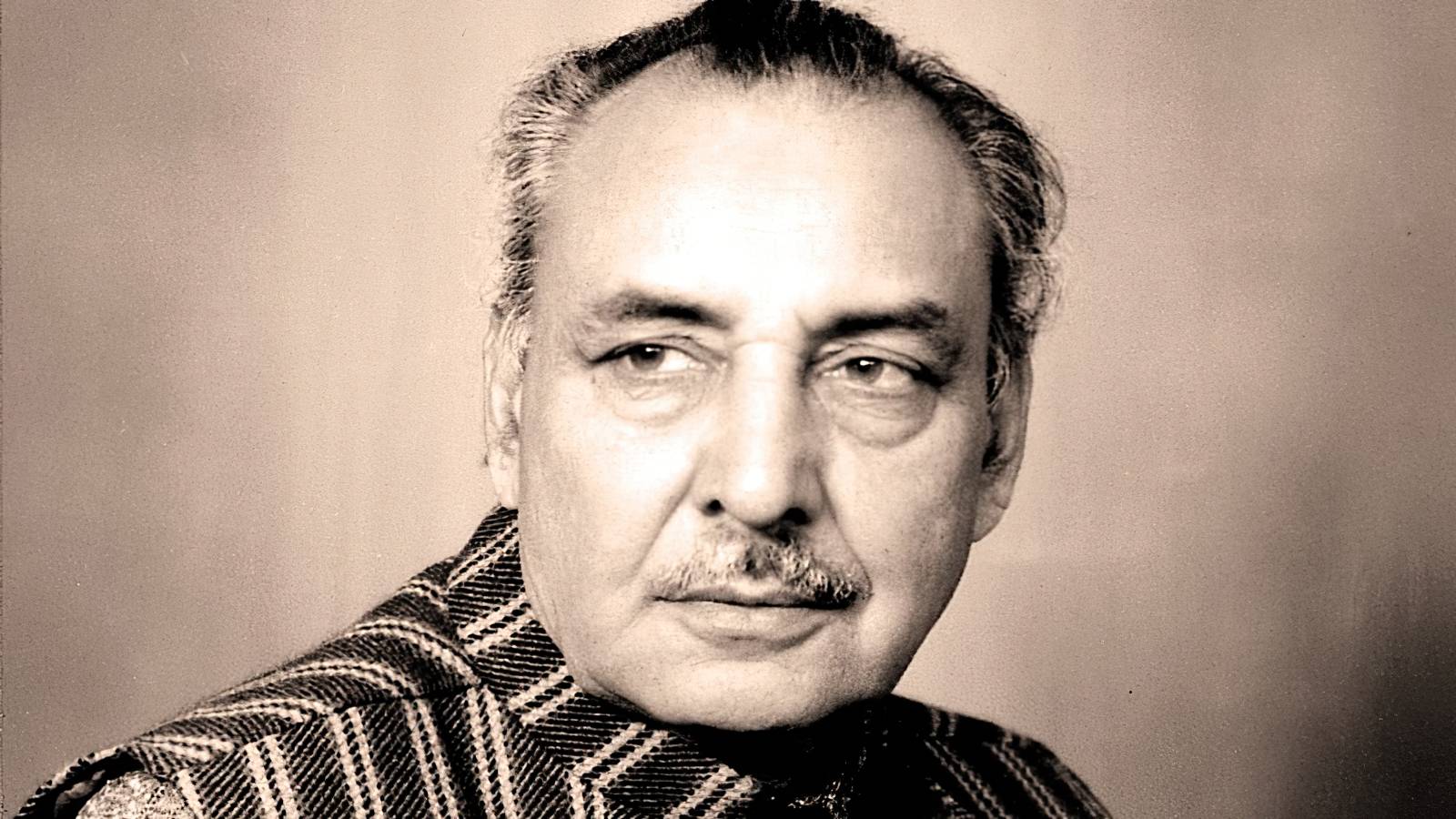
Inayat Hussain Bhatti was a prominent Pakistani playback singer, actor, producer, and director. He remains a significant figure in the development of Punjabi language and literature. Over a career spanning 50 years, he acted in more than 300 movies. He also provided music for approximately 200 films by recording 350 songs.
Early life and education
Bhatti was born in Gujrat, Punjab, on 12 January 1928. He grew up in a Punjabi Muslim family. His father, Fazal Ellahi Bhatti, was a well-known social worker within the local community. Bhatti's early interest in the arts stemmed from two men. Syed Ijaz Hussain Gilani, a lawyer, introduced him to music and drama. Additionally, a local Kabbadi player named Asghar Hayat Jaura helped spark his interest in Sufi poetry.
In December 1948, he moved to Lahore to study law. He initially resided at the MAO College Lahore hostel. Shortly after arriving in Lahore, he delivered his first stage performance at YMCA Hall. He later accompanied Ijaz Gilani to Radio Pakistan, where he became a formal pupil of composer Master Niaz Hussain Shami. This training allowed him to participate in regular radio programs as a singer.
Career
Bhatti's professional breakthrough occurred in 1949. Master Shami introduced him to composer Ghulam Ahmed Chishti, who offered him the chance to record songs for the film Pheray. This film became popular and turned Bhatti into an overnight celebrity. He later secured a leading role in the 1955 Punjabi film Heer, starring alongside Swaran Lata.
He was the only male artist in the Pakistani film industry to achieve superstardom as both an actor and a singer simultaneously. As a producer, he released his first venture, Waris Shah, in 1962. While his second production, Moonh Zor (1965), was unsuccessful, his third film Chann Makhna (1968) became a blockbuster. This success led to a string of hits including Sajjan Pyara (1968), Jind Jan (1969), and Zulam Da Badla (1972). He produced 30 films under the Bhatti Pictures banner.
His musical legacy includes over 2,500 recorded songs in Urdu, Punjabi, and Sindhi. He performed many duets with legendary singers such as Noor Jehan and Malika Pukhraj. His patriotic song "Allahu akbar" from the 1958 film Genghis Khan serves as a signature tune for the Pakistan Army. During the 1960s, he also dominated the folk theatre genre in Punjab alongside Alam Lohar.
Personal life
In 1953, Bhatti married Shahida Banoo, the daughter of Ahmed Din Butt. Butt was a retired superintendent of the Indian Railways. This marriage was Bhatti's second wedding. Shahida Banoo passed away on 12 March 1997.
Bhatti's family includes several members active in the arts. His youngest son, Waseem Abbas, is a performer in film, TV, and stage productions. His grandson, Junaid Abbas Bhatti, holds the title of "The Baron of Ballencrieff" in the British nobility. His younger brother, Kaifee, worked as an actor and director from the mid-1960s until the late 1990s.
Awards and recognition
Bhatti received significant industry acclaim for his work in cinema. His film Chann Makhna won the Nigar Award as the best picture of 1968. In 1996, he was invited to attend a Cultural Mela in Mohali, India, by the Minister of East Punjab, Harnek Singh Gharun.