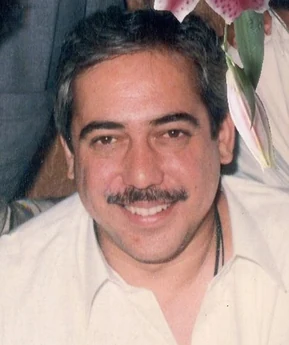
Murtaza Bhutto was a Pakistani politician and leftist activist who led the Al-Zulfiqar organization against the military regime of General Zia-ul-Haq. He was a member of the prominent Bhutto family as the son of Zulfikar Ali Bhutto. His political life was defined by intense opposition to the state and internal conflicts within his own family.
Early life and education
Born in Karachi on 18 September 1954, Murtaza Bhutto belonged to a Sindhi Rajput Bhutto family. He was the son of Zulfikar Ali Bhutto and Nusrat Bhutto. His siblings included Benazir, Shahnawaz, and Sanam. He received his early schooling at St. Mary's Academy before passing his 'O' levels from Karachi Grammar School in 1971.
He moved to the United States in 1972 to attend Harvard University. During his time there, he was the roommate of Bill White, who later became the mayor of Houston. Bhutto graduated in 1976 with a thesis titled "Modicum of Harmony." This academic work examined the spread of nuclear weapons and the specific implications of India's nuclear program on Pakistan.
After his studies in America, he attended Christ Church Oxford to pursue a three-year Master of Letters degree. He followed in the footsteps of his father by attending this institution. His master's thesis focused on nuclear strategic studies. In this work, he argued that Pakistan possessed the right to develop a nuclear deterrence program to counter India.
Career
Murtaza founded the Al-Zulfiqar Organization (AZO) after his father was overthrown and executed in 1979. This left-wing militant group attracted younger members of the Pakistan People's Party who were disappointed with the existing leadership. While the AZO earned a reputation as a terrorist organization due to various activities, Bhutto consistently denied that he supported the politics of terrorism.
In March 1981, his organization hijacked a Pakistan International Airlines flight and diverted it to Kabul. The hijacking lasted for 13 days before the plane traveled to Damascus, Syria. During this period, Murtaza shot Major Tariq Rahim, an army officer. According to Vasili Mitrokhin, Bhutto had met with Afghan Intelligence chief Mohammad Najibullah on 3 occasions in Kabul prior to the event. Najibullah reportedly provided the group with money, weapons, and explosives.
The hijacking forced the Zia government to release dozens of prisoners from Pakistani jails. While living in exile in Afghanistan, Murtaza was sentenced to death in absentia by a military tribunal. He eventually returned to Pakistan in 1993. Upon his return, he was arrested for terrorism under the orders of his sister, Prime Minister Benazir Bhutto.
After being released on bail, he successfully contested elections to the Sindh Provincial Assembly. He used this platform to become a vocal critic of Benazir Bhutto and her husband, Asif Ali Zardari. Tensions between the siblings escalated significantly over time. Murtaza was shot dead along with 6 associates during a police encounter near his Karachi home on 20 September 1996.
Following his death, President Farooq Leghari dismissed Benazir's government one month later. The dismissal cited corruption and the death of Murtaza as primary reasons. Although Asif Ali Zardari was indicted for the murder, he was acquitted in 2008. His faction, the Pakistan People's Party–Shaheed Bhutto, remains active in the political landscape.
Personal life
Murtaza married an Afghan woman named Fauzia Fasihuddin in 1980. His brother Shahnawaz also married her sister, Rehana Fasihuddin. They had a daughter named Fatima Bhutto. The marriage eventually ended in divorce, leading Murtaza and his daughter to move to Syria.
In 1989, he married Ghinwa Bhutto, a Lebanese dancer. The family moved to Karachi in 1990. During their time in Karachi, the couple had a son named Zulfikar Ali Bhutto Jr.