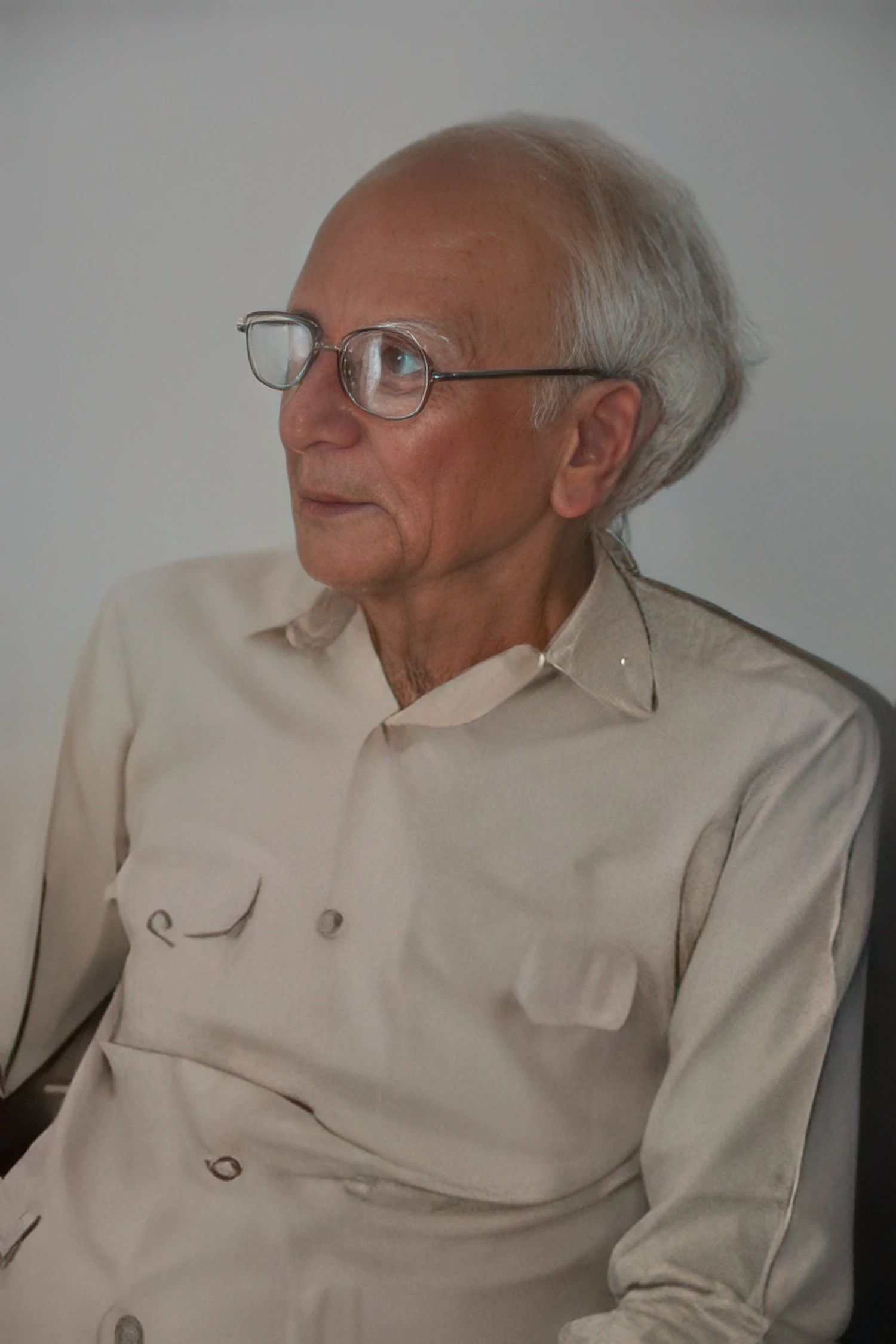
Mubashir Hassan was a Pakistani civil engineer, politician, and science administrator. He served as the 9th Finance Minister of Pakistan from 1971 to 1974. A co-founder of the Pakistan People's Party, he remained a close confidant to Zulfikar Ali Bhutto throughout his political career.
Early life and education
Hassan was born on 22 January 1922 in Panipat, Punjab, British India. He was raised by his mother while his father worked for the government of Hyderabad Deccan. His maternal family members were descendants of the Urdu poet A.H. Hali. Following his matriculation in 1938, he attended Government College University in Lahore. He later transferred to the University of Engineering and Technology (UET) to pursue his studies.
He graduated with a BSc in civil engineering in 1942 at age 20. After a brief period as a Subdivisional Officer at the Irrigation department in Amritsar, he moved to the United States. In 1947, he earned an MSc in civil engineering from Columbia University in New York. Hassan returned to India immediately following the partition of the subcontinent. He eventually joined the engineering faculty at UET Lahore.
In 1953, he traveled back to the United States for doctoral studies. He attended Iowa State University and was conferred with a PhD in civil engineering in 1955. Upon his return to Pakistan, he rose through the academic ranks at UET Lahore. He eventually served as the Chairman of the Department of Civil Engineering.
Career
Hassan's political philosophy emerged after the 1965 war with India. In 1967, he published "A Declaration of Unity of People" to advocate for Techno-Democratic socialism. During this period, he lectured on engineering physics at Dhaka University. In November 1967, he co-founded the Pakistan People's Party alongside Zulfikar Ali Bhutto and J.A. Rahim.
His administrative influence grew significantly during the Bhutto administration. After the 1971 Winter war, he was appointed Finance Minister. In this role, he managed the nationalization of the private sector to establish a planned economy. He also helped establish the Ministry of Science in 1972 to increase the country's scientific output.
Hassan played a central role in the development of Pakistan's atomic bomb project. In 1972, Bhutto tasked him with managing the finances for this program. He worked closely with Munir Ahmad Khan on technical and economic aspects. As the 3rd Science Advisor to the Prime Minister Secretariat from 1974 to 1977, he served as the Director of the Directorate for Science. He advised on the Kahuta Project but reportedly objected when Bhutto assigned project responsibilities to the Corps of Engineers.
Political instability led to his departure from the Finance Ministry in 1974. Following his resignation, he remained a political adviser until the military takeover. He was arrested by Military Police in 1977 and imprisoned in Adiala Jail alongside Bhutto. He spent 7 years in prison before his release in 1984. After leaving active politics, he returned to UET Lahore as a professor of civil engineering. He also became a member of the Human Rights Commission of Pakistan.
Personal life
Hassan was born into a family that practiced medicine as a profession. His elder brother studied medicine at King Edward Medical University. Although he retired from active political activism, he continued to write extensively on hydraulics engineering and mathematical problems. He passed away on 14 March 2020.